
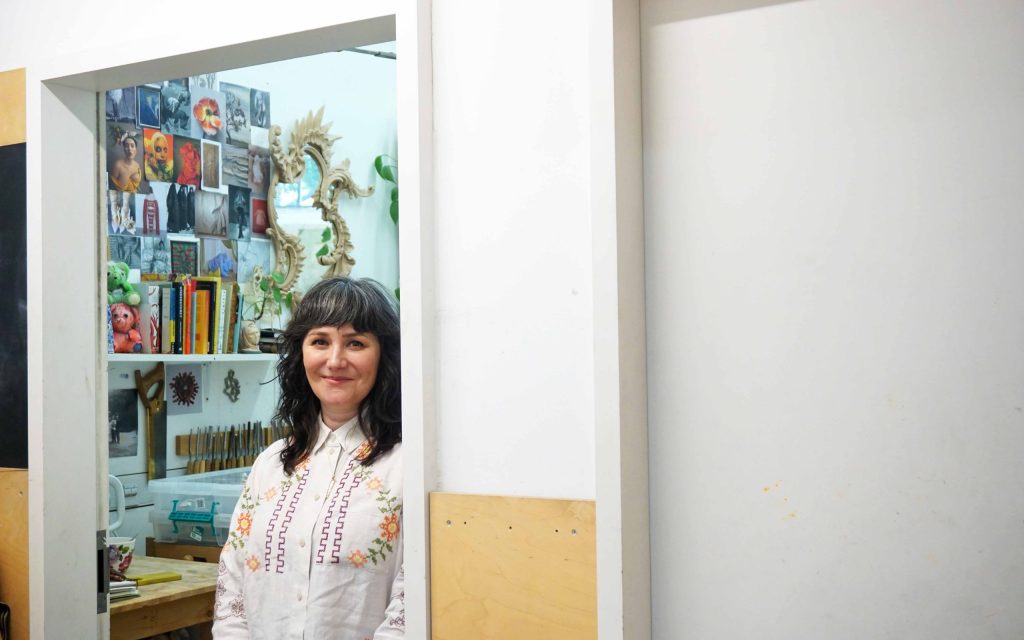
On Jo’s Practice:
‘I’m a sculptor and use traditional methods of wood carving, so I carve everything by hand using chisel and mallet, and my work really is about the blend of using historical craft to inform a contemporary direction
I worked as a fashion designer for over 20 years, and in 2020, I decided to change my life, and I retrained in historic wood carving and gilding. The course was very technical, which felt important to me.’
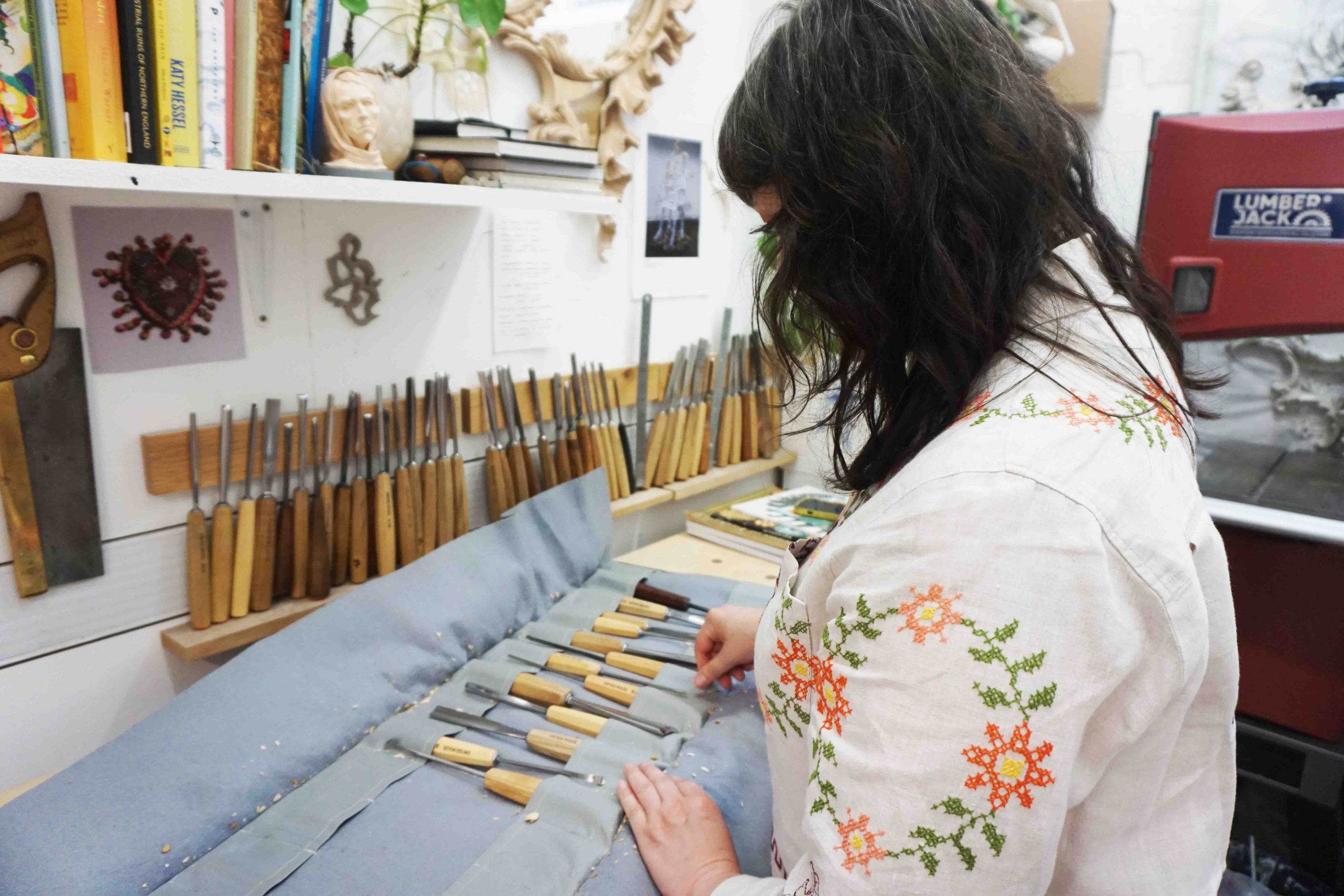
‘But I knew that mastery of the skill alone could not define my practice. Whilst my course provided me with technical ability, I have spent the last few years at the Sarabande Foundation developing my artistic practice. This change has been so much more than just a career or gaining new skills; it has been a lifetime of trying to reconnect with who I am and finally feeling brave enough to say it.’
On the process of carving:
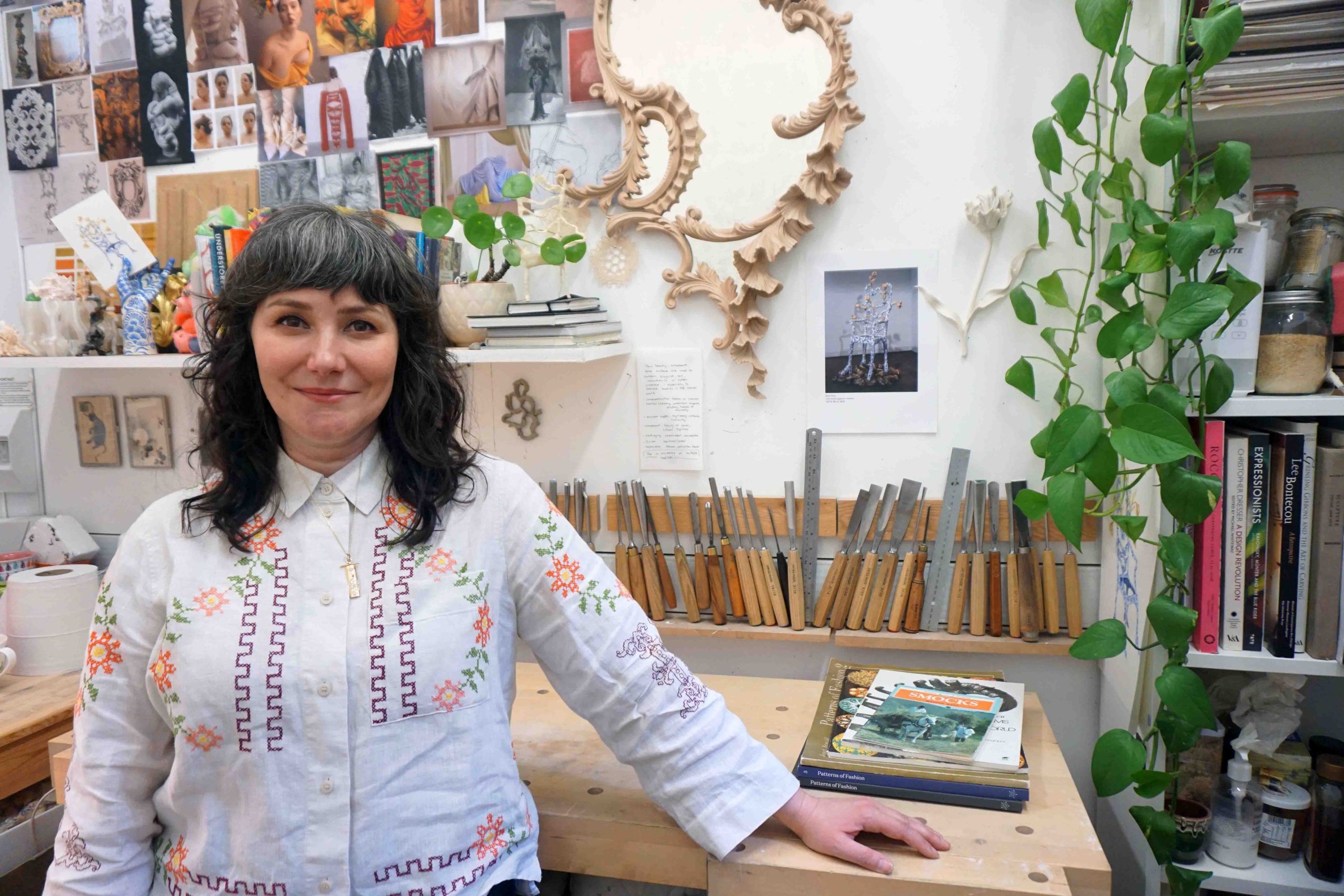
‘The carving tools here are only a fraction of what I have. Wood carvers use a lot of different chisels because historically, the shape, what we call the sweep of the chisel, is like the final cut. If you want something to be cut a certain way, you will use a specific chisel. That’s why we have so many, because you’re not using one chisel to do multiple things. It makes carving very practical and very technical.’
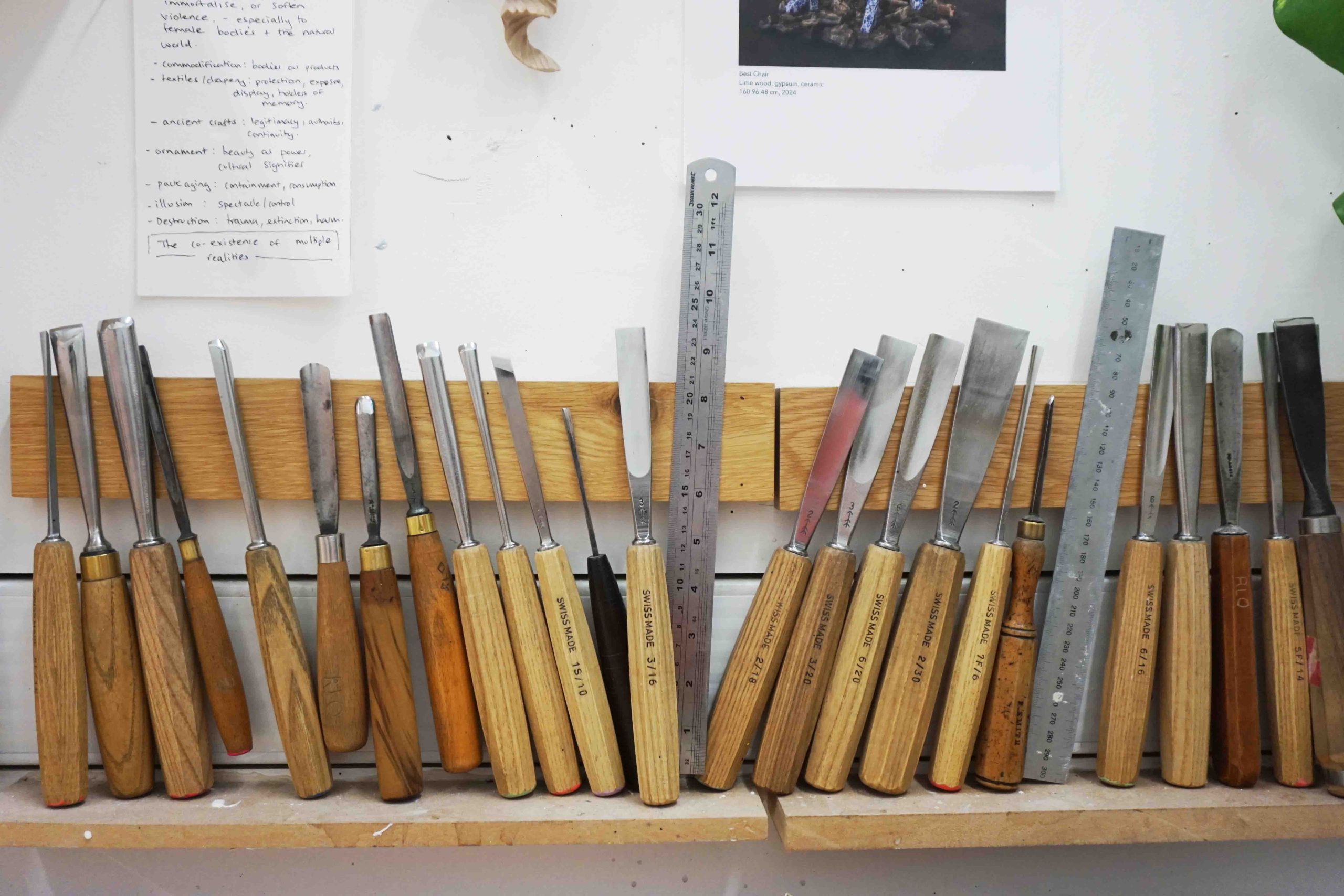
‘Some of those chisels have got special stories. A few were gifted by David Esterly, who was a phenomenal carver and donated his personal collection to a lot of wood carving students who were training. But the ones he donated would have come originally from other carvers. So some of the ones might be 150 years old.
Something that people may not realise is that there are so many parts of technical carving that are underestimated. One of the most important parts of carving by hand and using chisels is that the chisels need constant upkeep and care. I sharpen all my chisels by hand. Sharpening is a funny one, because I always say it took me longer to learn how to sharpen than how to carve. There is a real skill and technique to it that I’m still learning.’
 On the band saw:
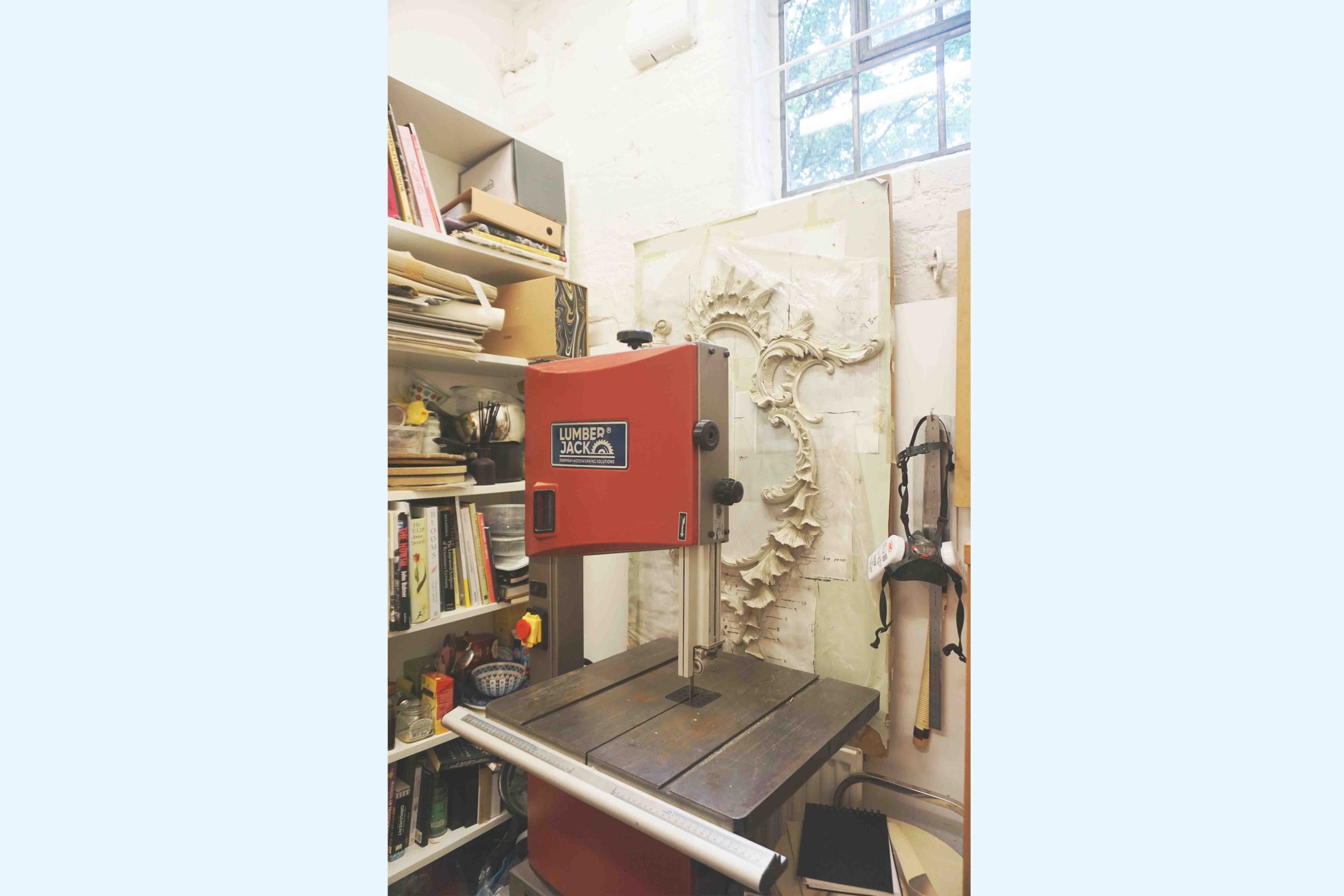
‘I love the fact that this is called a lumberjack, although I’m terrified of it as well. I’ve always had a bit of a fear of machinery, and so when I first started my training where you had table saws, I thought, “oh my god, this is horrendous”, thinking I was going to lose a finger. But this band saw is a special piece, because my dad bought it for me. I haven’t had a lot of financial support from my family because they’re not in a position to, but when I first left university, my dad knew that I really needed help. My dad was a carpenter and joiner himself, and so it’s got a lot of sentimental value as well.’
On Clay:
‘The clay frame behind the saw is the model I used before carving the mirror piece. Historically, in wood carving, you would model it in clay first and then take all the dimensions from that. It means you can see compositionally that it works, and you understand the volumes, because trying to resolve that directly in carving is quite a challenge.’
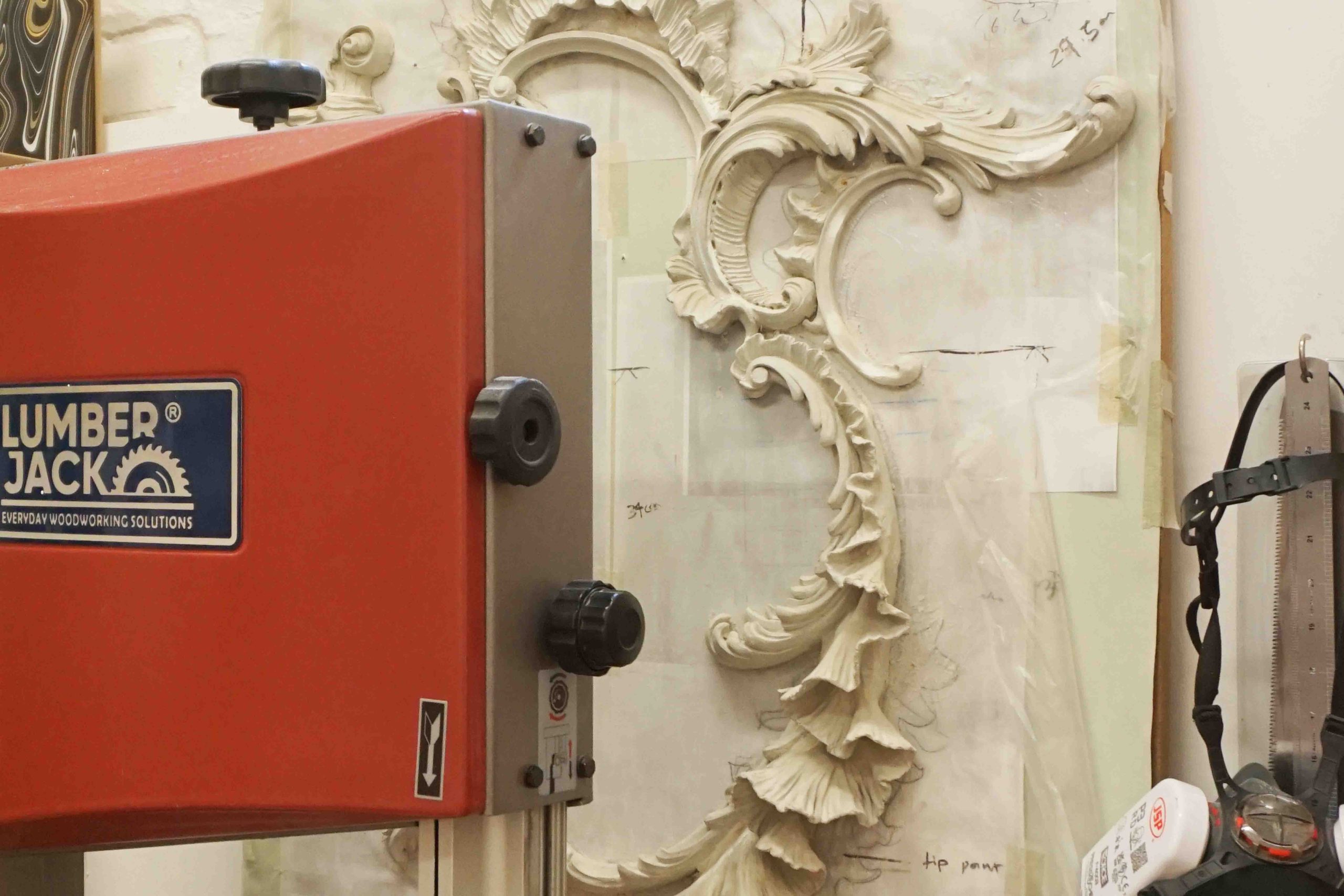
‘Modelling in clay gives you all the information you need before you move into the final material. Usually, the clay is then recycled and doesn’t exist afterwards, but I have kept a few. I got very attached to the model for the mirror because that’s where everything was worked out for that piece. It was reworked at least five times, and every decision about the piece happened there first in clay.
I recently used clay in a workshop at Delfina Foundation. What I find interesting is that clay is additive, and carving is reductive. You build something up, and then you take it away. In that process, you get to know a form almost inside out, and you develop a kind of muscle memory. You start to recognise curves, volumes, mass, and the way something sits in space.’
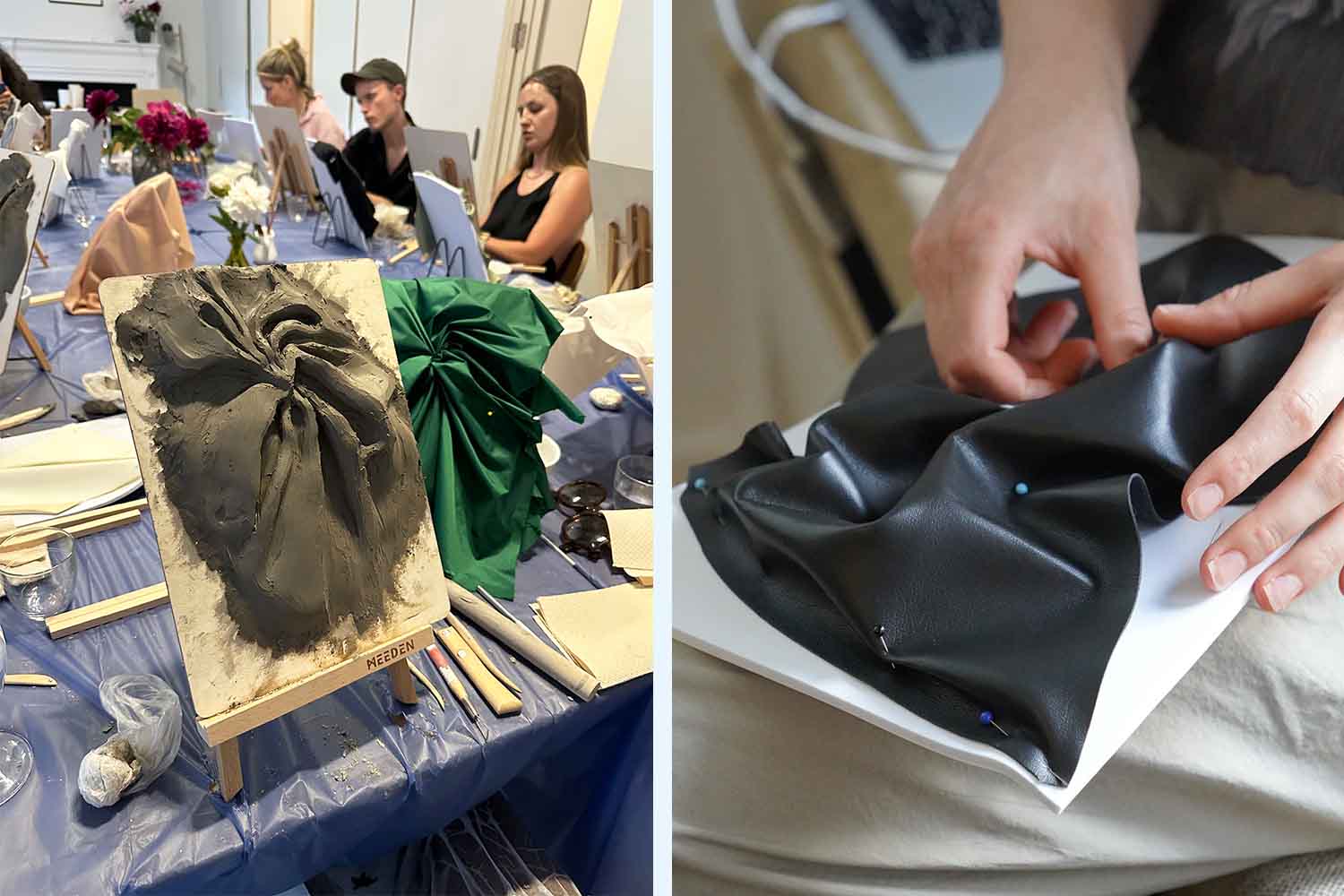
‘I’ve always found clay very beautiful in the way it’s so immediate and expressive. With carving, you’re working against a more rigid material; there are boundaries, whether that’s the grain of the wood or its natural faults. But with clay, there’s this instant response. I actually find it quite an emotional material. The workshop at Delfina was about exploring emotion through making and how you can convey feeling through fabrication rather than just technical skill.’
On Tony the Lobster:
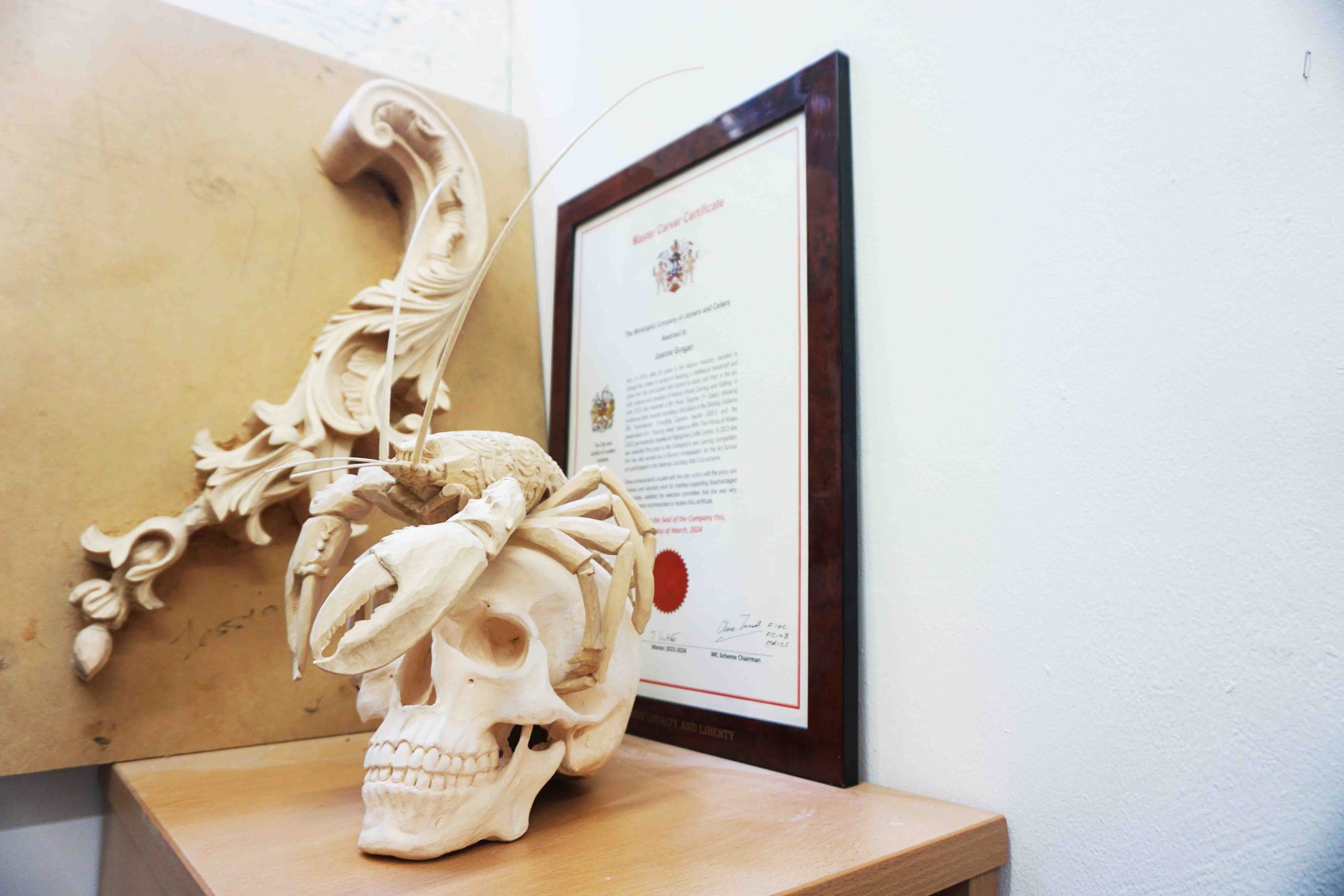
‘Tony is the lobster, but the skull doesn’t have a name, which I feel is a bit of a missed opportunity. If anyone’s got any suggestions, let me know! Tony is a very special piece to me. I made it in the first year of my training, so I’d only been carving for nine months. I’d never carved before, and I think it helped me to realise that if I did put time, practice, patience and care into carving, I could achieve some of what I had visualised. I won the Grinling Gibbons Tercentenary Emerging Carvers Award with that piece, which at the time felt like an enormous achievement. The lobster itself was referenced from an Erik Halley hat that he made for Isabella Blow, which she wore in the 90s, and the use of lace references the carvings of Grinling Gibbons, so it’s a combination of my past in fashion and my carving practice.’
On Family Traditions:
‘I come from a family of craftspeople, and I believe in the embodied knowledge and continuity that traditional training provides. My Nan was a dressmaker, an embroiderer, and she did bobbin lace. She taught me to embroider when I was around seven.’
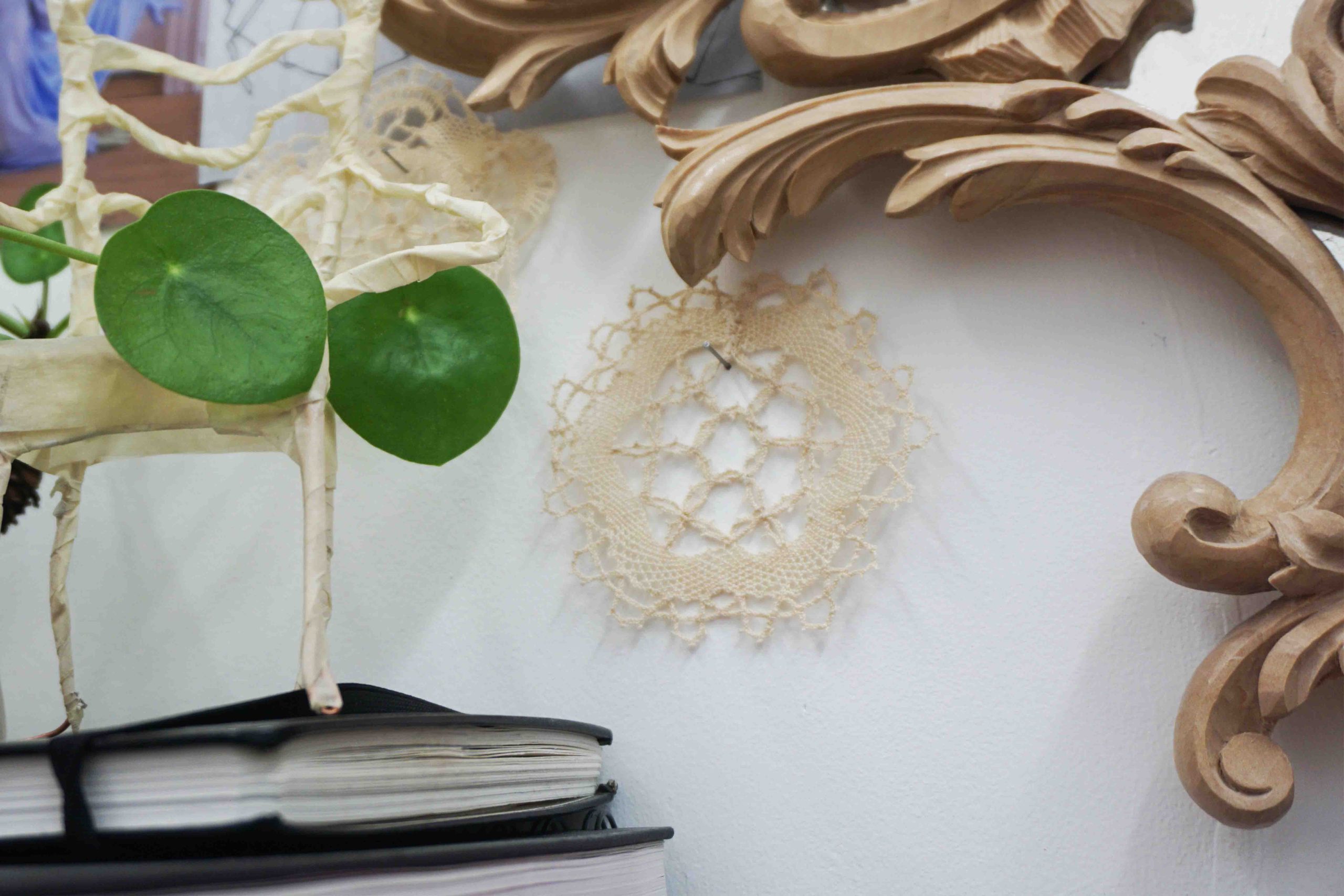
‘It feels special to have that connection to a line of people with skills and making in the family, and to see how those things get passed down. I think I took it for granted for a long time. I assumed everyone had a grandparent or parent who could simply show them how to do things.
But the world has changed. Many families still have makers in them, but not always the time or space to pass those skills on. There’s also the question of how you encourage people to learn practices that take time, patience, and repetition, in a world full of distractions: phones, social media, and the internet.
We live in a moment that often prioritises instant gratification, and something has been lost in that shift: the understanding of what it means to really invest in just learning something and being rubbish at it for a while.’
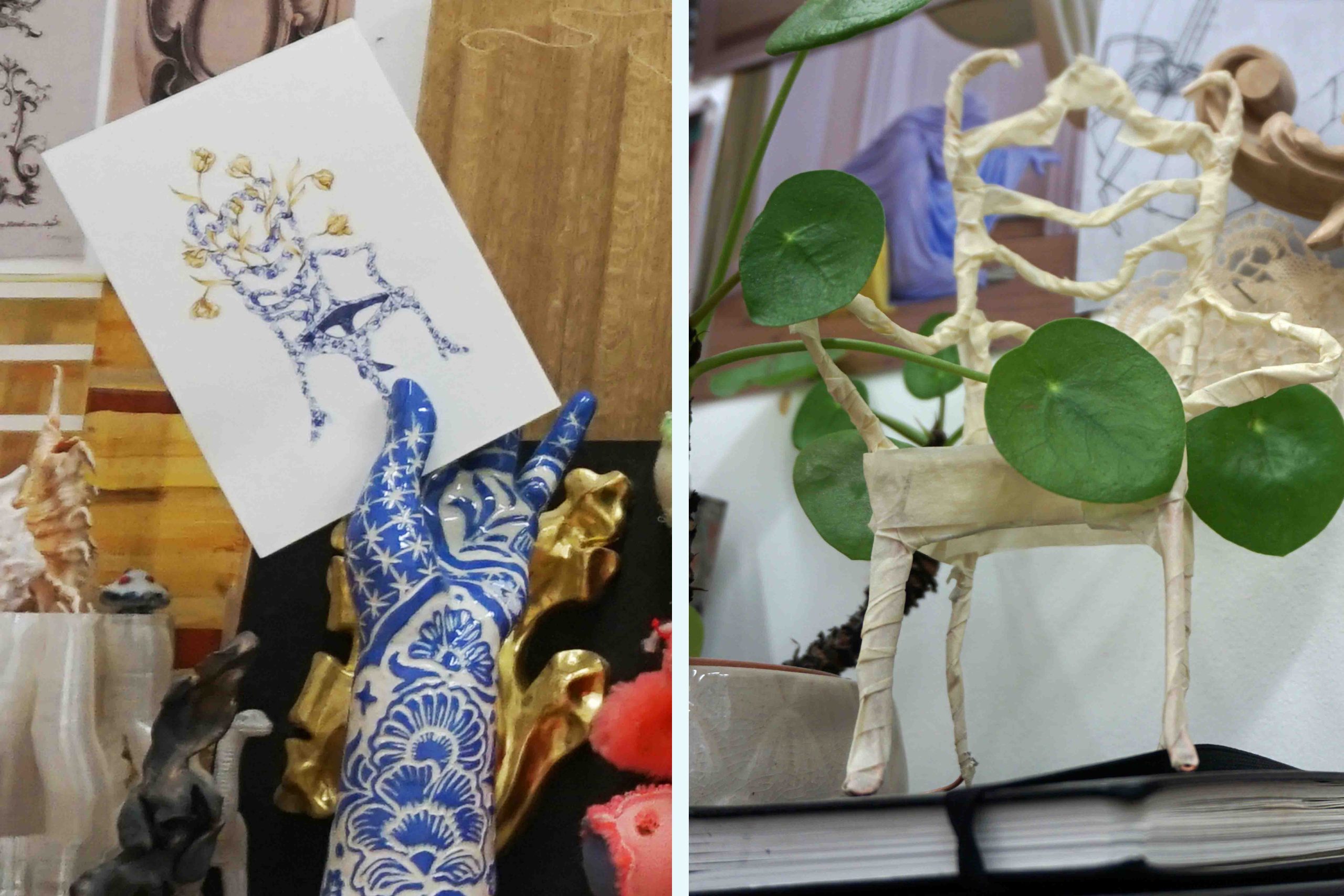
On a piece close to the heart:
‘I’ve become a bit attached to this little maquette of the chair. I’ll always sketch, but until I’ve kind of made a small model, then it makes sense what you’ll end up carving. When I was originally developing the chair, I referenced Gimson’s ladder-back chair from the Arts and Crafts period. I knew I wanted to use that as a base, but I didn’t want it to be as straight and rigid; I wanted to introduce more of a playful element to it. The maquette model was the very beginning of me playing with a form and shape to kind of understand how this could look.’
The chair represents a significant moment in my practice. I created it during my first year at Sarabande; it was the first time I successfully brought together the technical skills I had developed with the conceptual rigour that now underpins my work.’
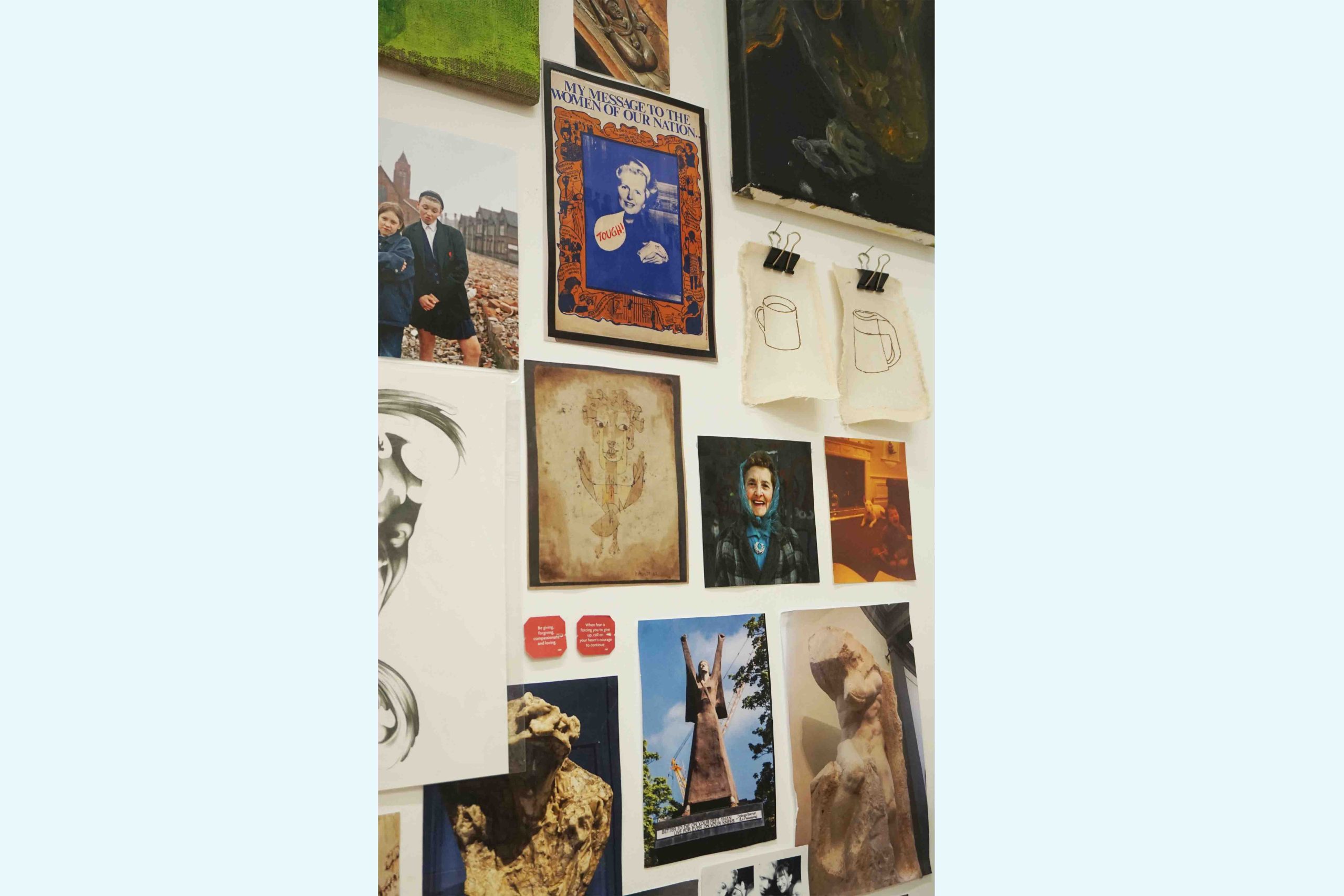
On inspirations in the studio:
‘I have two main inspiration walls in my studio, the first is the small wall peppered with pieces of art that have been given to me by past residents at Sarabande. To have their work in my space reminds me of them and makes them feel close. They are traces of silent structures of friendship that helped to guide me through a time of transformation and upheaval.
The wall also has images of various pieces of art, which helped me to see another way of existing, and pictures by one of my favourite photographers, Rob Bremmer, who photographed my home city, Liverpool, during the 80’s and 90’s. I grew up in Liverpool around that time and I witnessed a city in crisis, bearing the scars of post-industrial decline, and social fragmentation.’
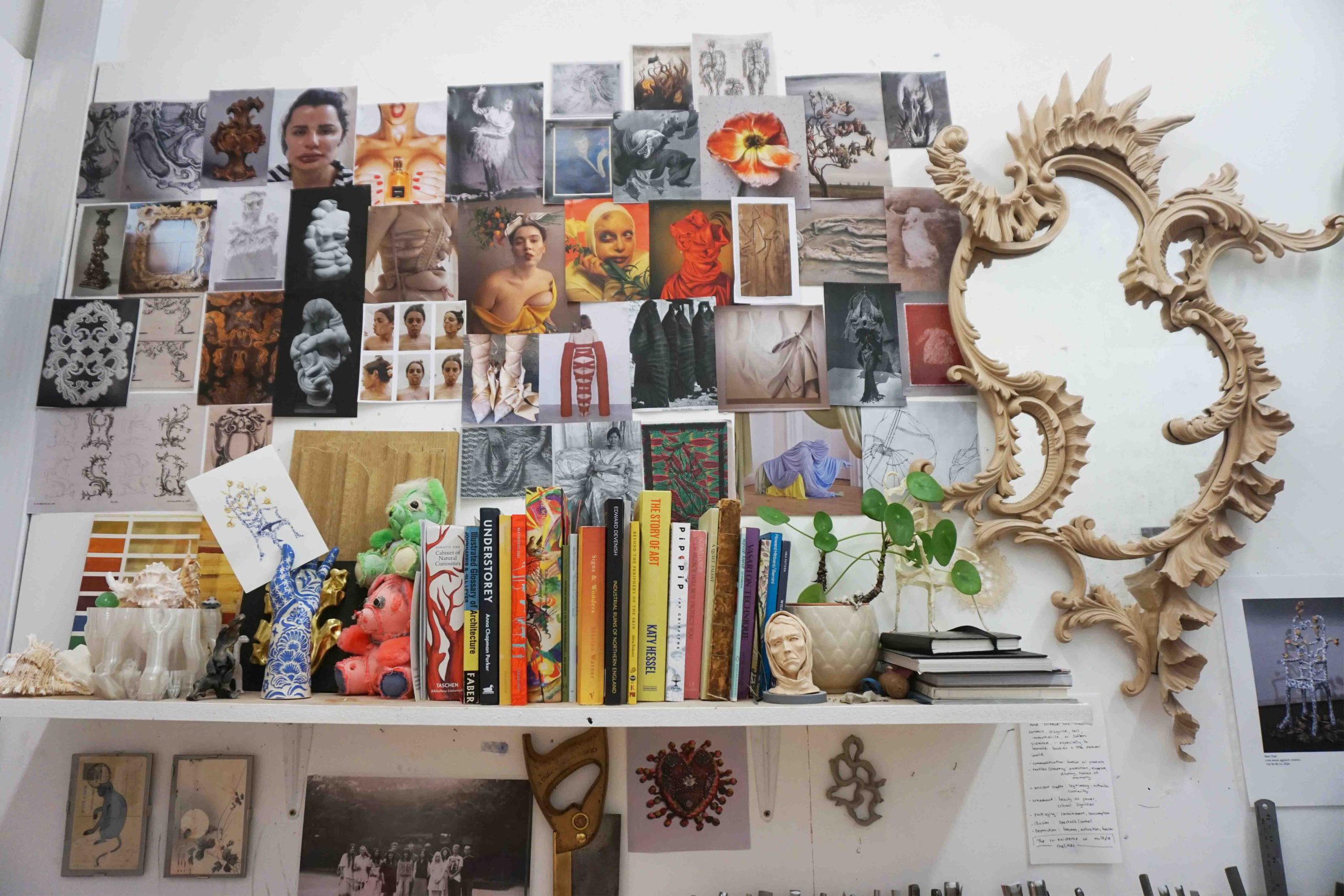
‘The larger wall is a fragmented constellation of the contents of my mind, a visual map that connects the dots of thought. It’s a visual representation of the themes I keep coming back to, like the exploration of layers of self, history, ornament, fabric and textile. The many dualities that life presents, what is exposure/protection, what is restraint/support, where do those lines meet, and more importantly, how do they feel. To look up is to see the visual markers of thought, of a restless mind grappling with the next adventure.’
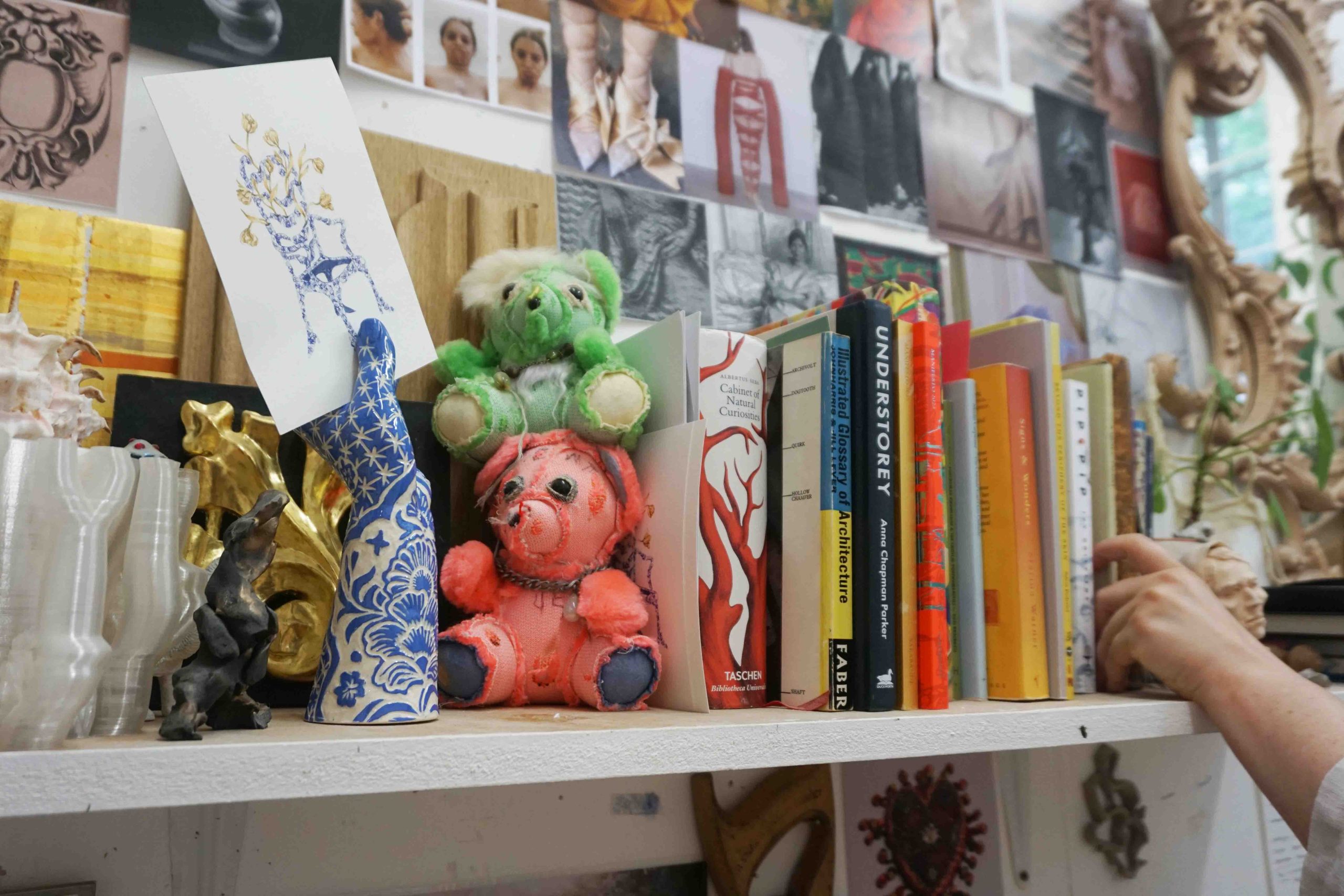
‘As a kid who only ever liked comic books, reading has never come naturally to me. But books have formed the main source of material for my work, they feed my necessity to learn and understand, to feed my fascination with history, culture and the intricate wirings of past to present.’
On Empathy:
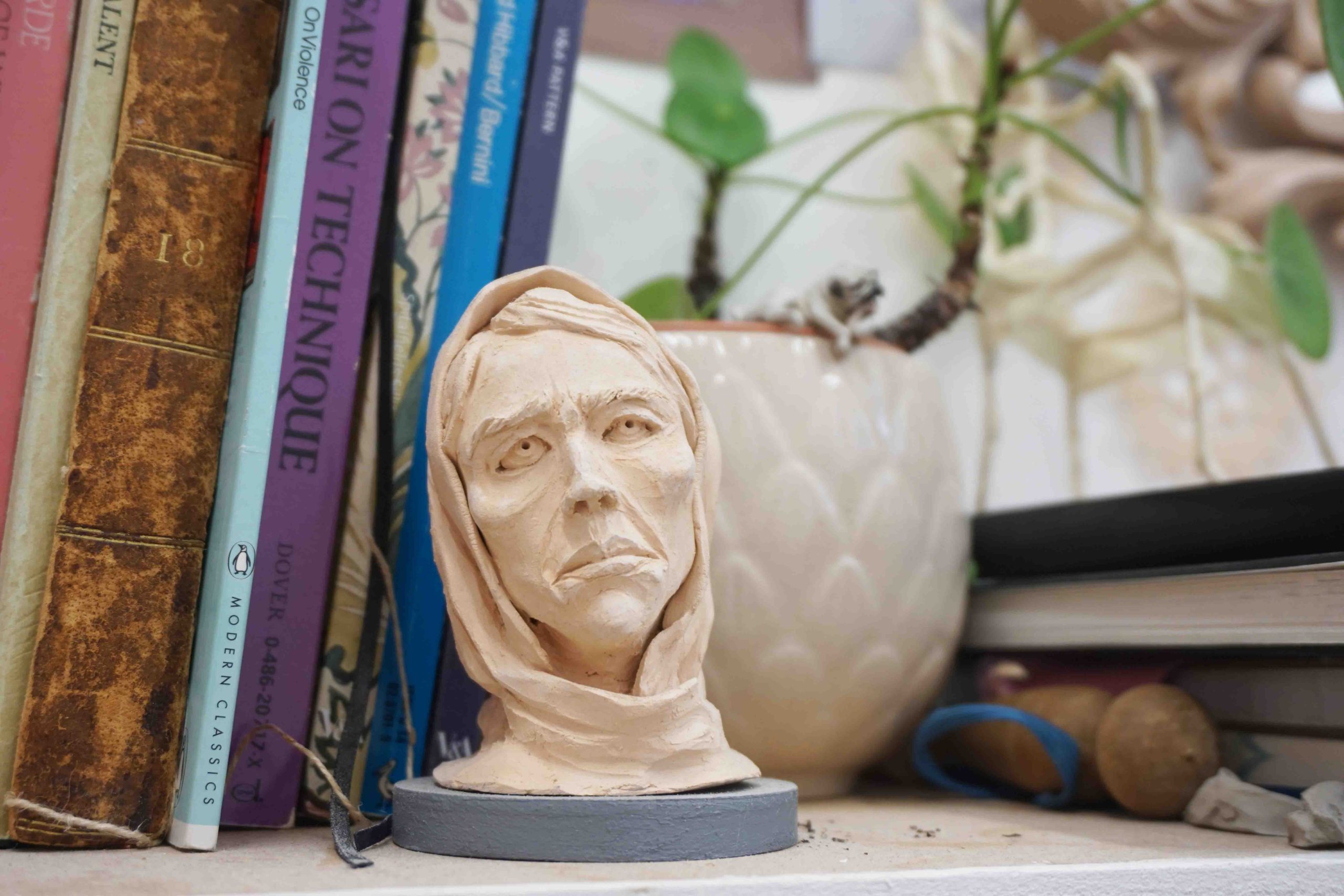
‘This piece is called Empathy. It won a GCDC award a few years ago in the modelling category. The piece is clay, so it’s fired, and it is a representation of Jacinda Ardern, Prime Minister of New Zealand at the time I made it. It’s a depiction of her wearing a hijab after she met the families of the victims of the Christchurch attack, and for me it was one of the very rare times that I saw what I perceived as genuine empathy on a political world leader’s face. The piece isn’t a technical study, it was an expression of emotion, and I really wanted to convey that, and it’s only quite small in stature, but I think it packs a punch.’
On the importance of coming together:
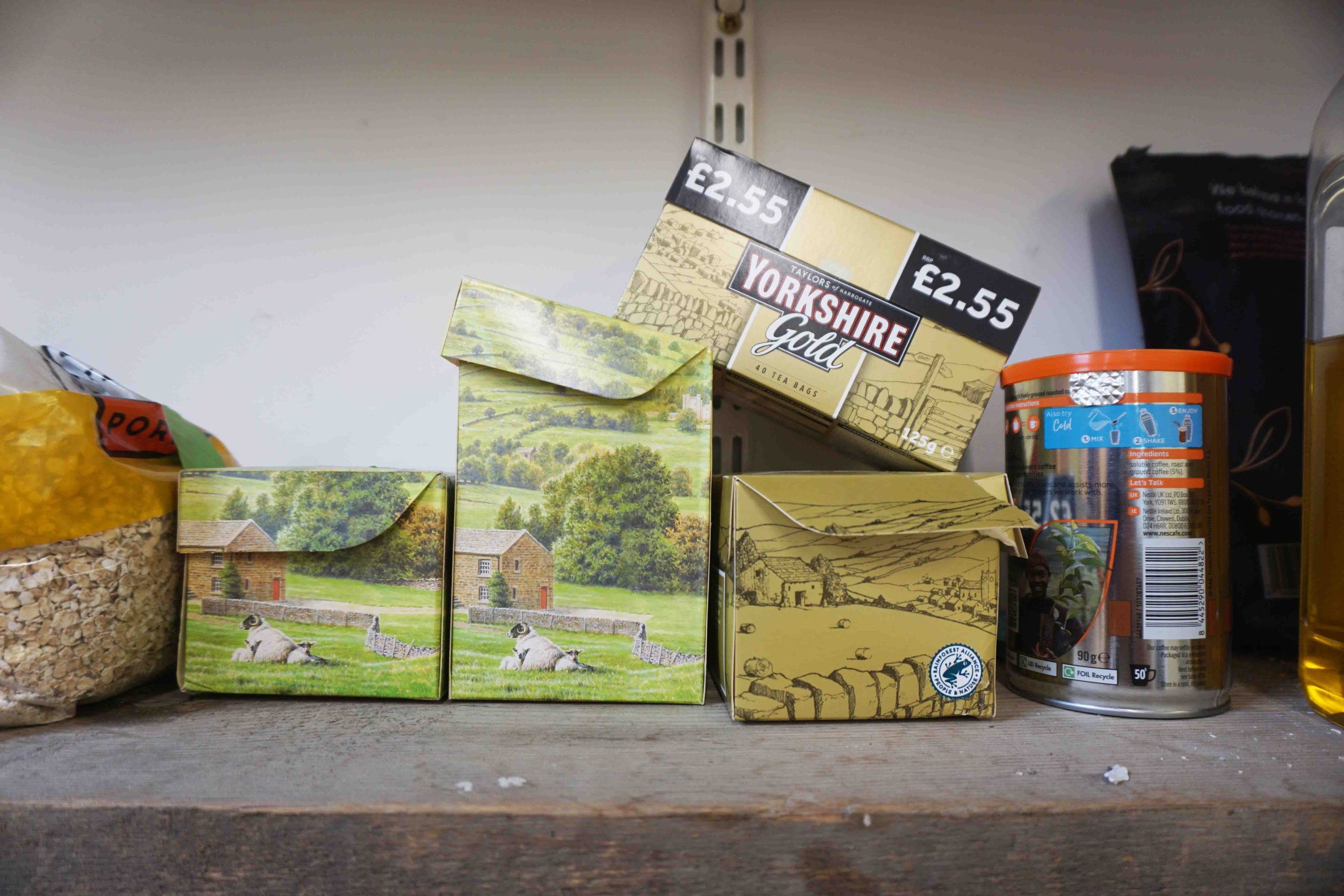
‘The kitchen space in Sarabande is one of the most important spaces, because it is the place where we can all take a minute, have a brew, a biscuit, and come together. We can talk about whatever’s on our minds, what we might be thinking or feeling, we can share creative ideas, or we could just have a moment.
At Delfina Foundation, it’s the kitchen space or the dining room where I found I’ve had some of the best conversations. Even though I don’t live in the building, these spaces still make you feel like you’re a part of the residency. I’ll sometimes come by the Delfina house, and I still feel like it’s my home.’
On layering meaning and practising slowness:
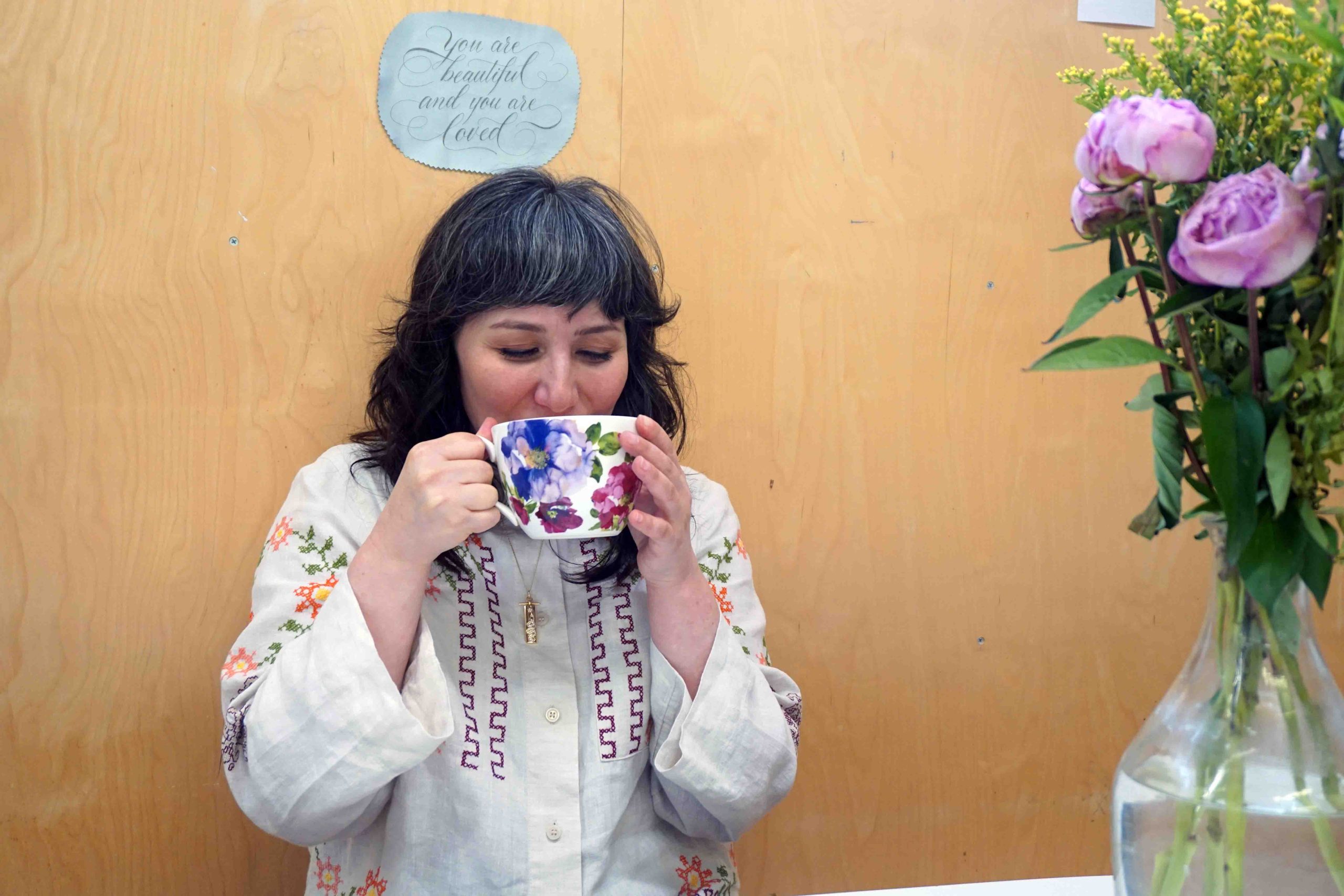
‘Having spent many years in fashion, I witnessed the consequences of industrialisation and capitalism firsthand. I wanted to reconnect with natural materials and a more thoughtful, humane way of making. Through carving, I can explore not only my own layers, but also those of social and cultural history. The hidden processes within each piece matter; they connect stories that are often overlooked, particularly those of craftspeople and other voices absent from traditional historical accounts.’
‘My work asks questions about progress, technology, and who our systems truly serve. In a world defined by rapid change and uncertainty, I believe those questions are more important than ever.
The slowness of my practice is intentional. It is an act of resistance and a reminder that care, attention, skill, and patience matter. Knowing these works may outlive me, I see them as both a record of the present and a gift to the future, a testament that there are still people committed to ways of making that have connected humanity since the earliest civilisations.
I am deeply grateful to the Delfina and Sarabande foundations, without whom this work would not be possible. In times of division, may we continue to protect and nurture spaces built on care, generosity, and community.’
Jo Grogan is a resident for Delfina Foundation’s inaugural Making and Materiality thematic season. Her residency was supported by Armature.