
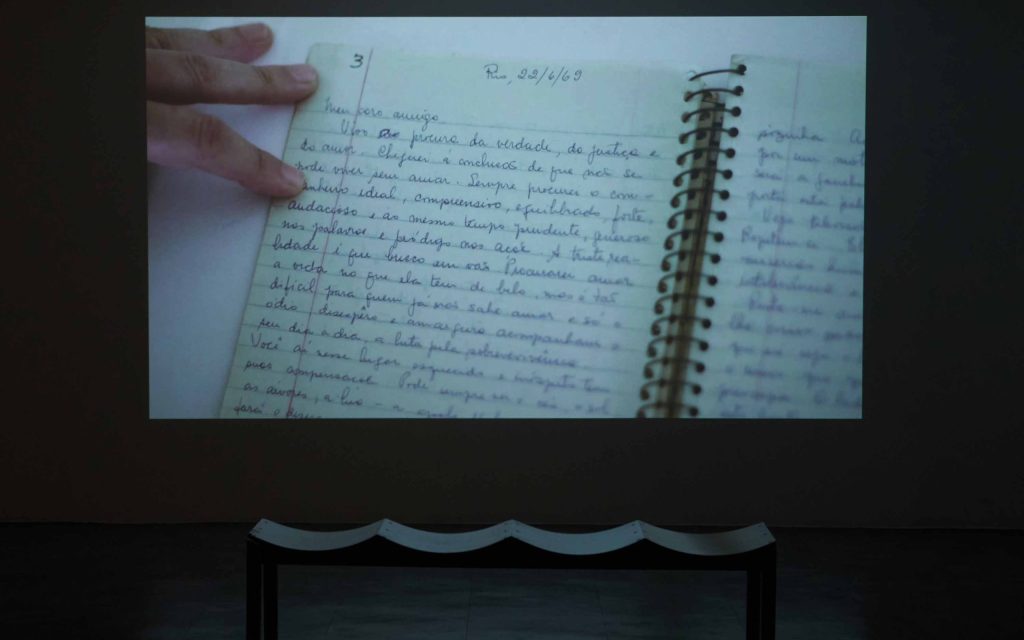
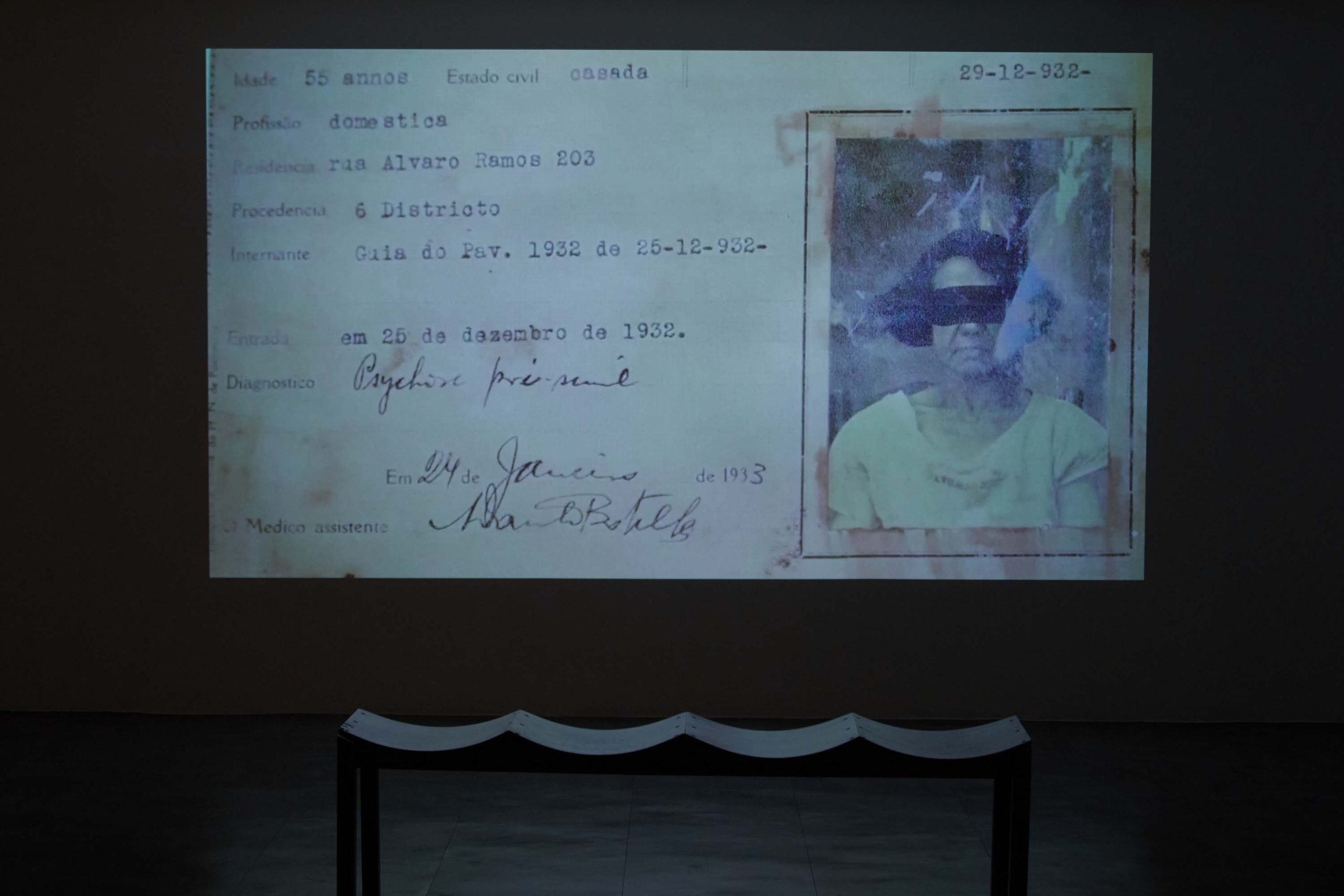
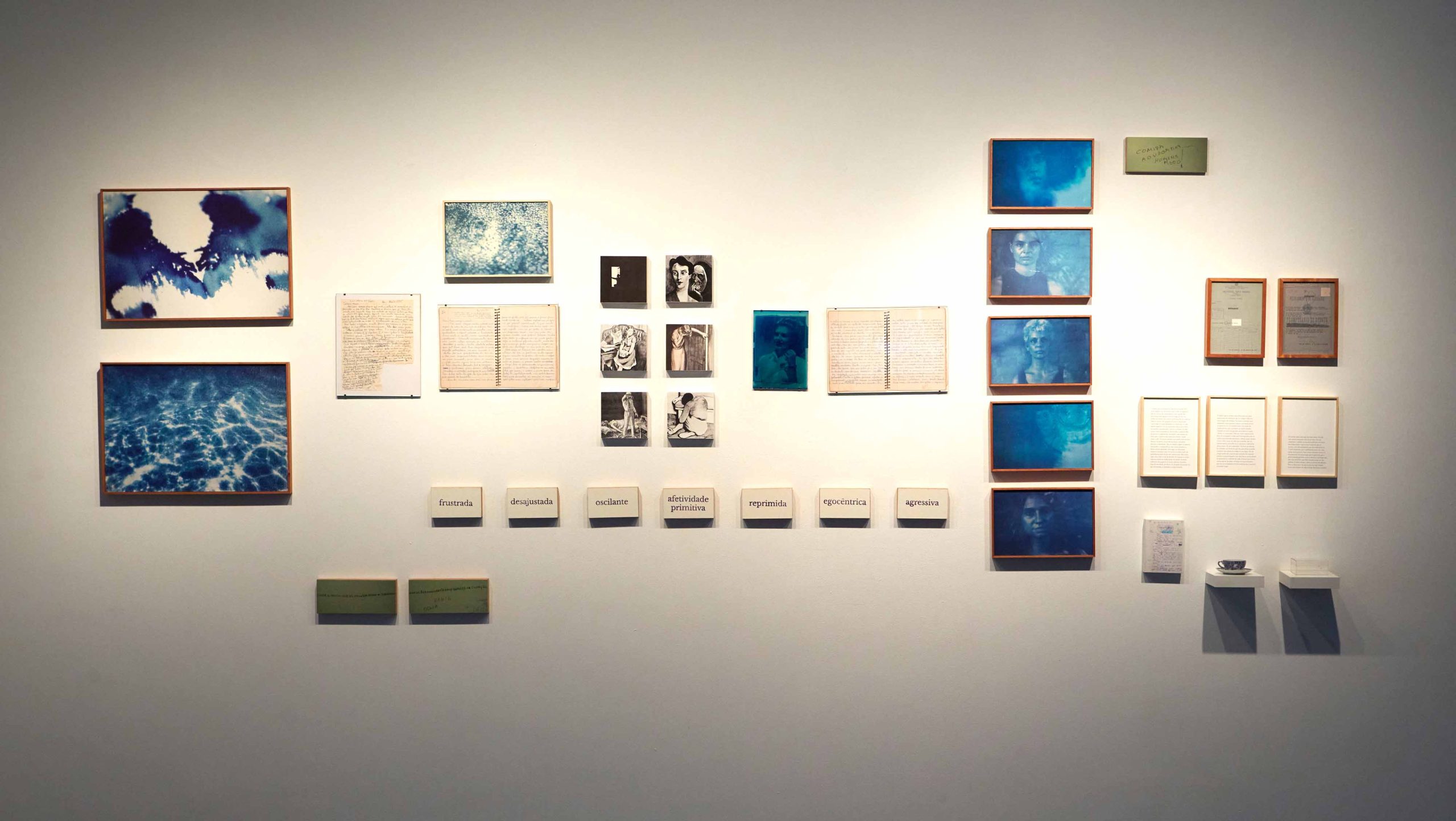
Anna Costa e Silva and Nanda Félix, Please read it for me to rest in peace, 2022-2024. Exhibition view: Mercosul Biennial, Porto Alegre, 2022/ Sesc Copacabana, Rio de Janeiro, 2024. Photo: Fabian Alvarez
In winter 2024, Anna Costa e Silva was selected from a global open call to be a resident for our science_technology_society thematic programme. In this contemplative writing piece, she reflects on the development of her artistic practice during the residency and the outcomes that resulted from it, including a salon, a project on intimate one-on-one encounters, as well as a performance at the Delfina House.
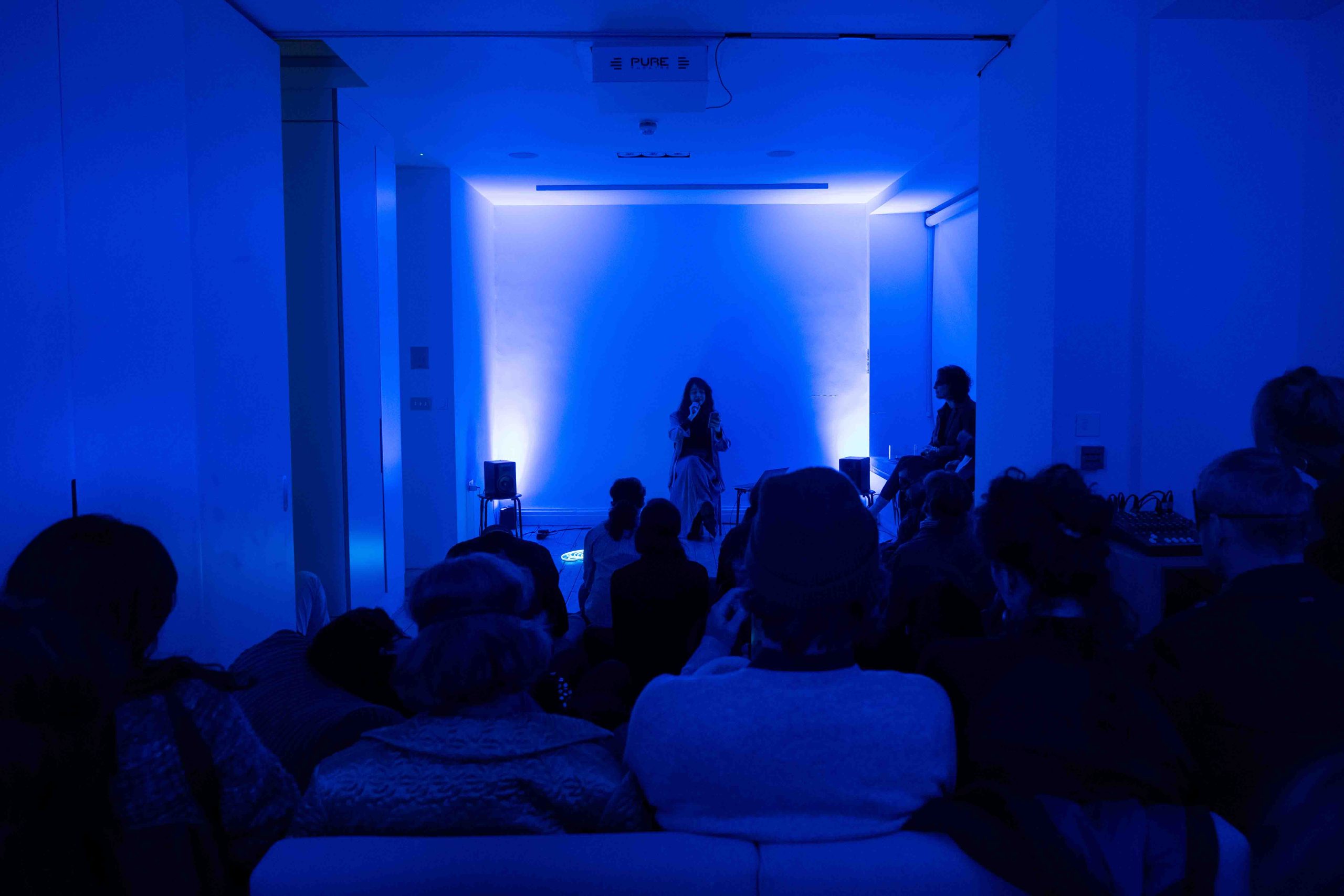
It is an evening in March in the dining room at Delfina Foundation. A group of people gather around a circle and talk about women and madness. Together, we reflect on the labels of madness that women have heard throughout life, which act as a way of silencing, manipulating or disregarding our voices. I ask all women who are present to write down words they have heard about themselves in that sense: “too loud”, “too sensitive”, “challenging”, “victimised”, “hysterical”, insane”, irrational”. At some point, later in the evening, the words are read out loud. This simple exercise opens the door for a discussion that comes mostly from our hearts rather than from our heads. We are talking about the ways that our sanity has been questioned and for which purposes this has served. In this room, there are women from different contexts, countries and socio-political backgrounds. We have different struggles and different battles. I observe how these very personal stories touch each other, how we are talking about something that is systemic and yet manifested in subtle ways. It is a profound experience to observe people in their most vulnerable state. In this intimate setting, we are sharing thoughts that are not yet fully formulated as concrete ideas but rather come from our most primitive instincts, trauma, and desires. I observe a quality of presence, a touching experience, rarely witnessed in the present day. At some point, one of the women, artist Wura Ogunji, points out the importance of insanity and of getting in contact with raw emotions.
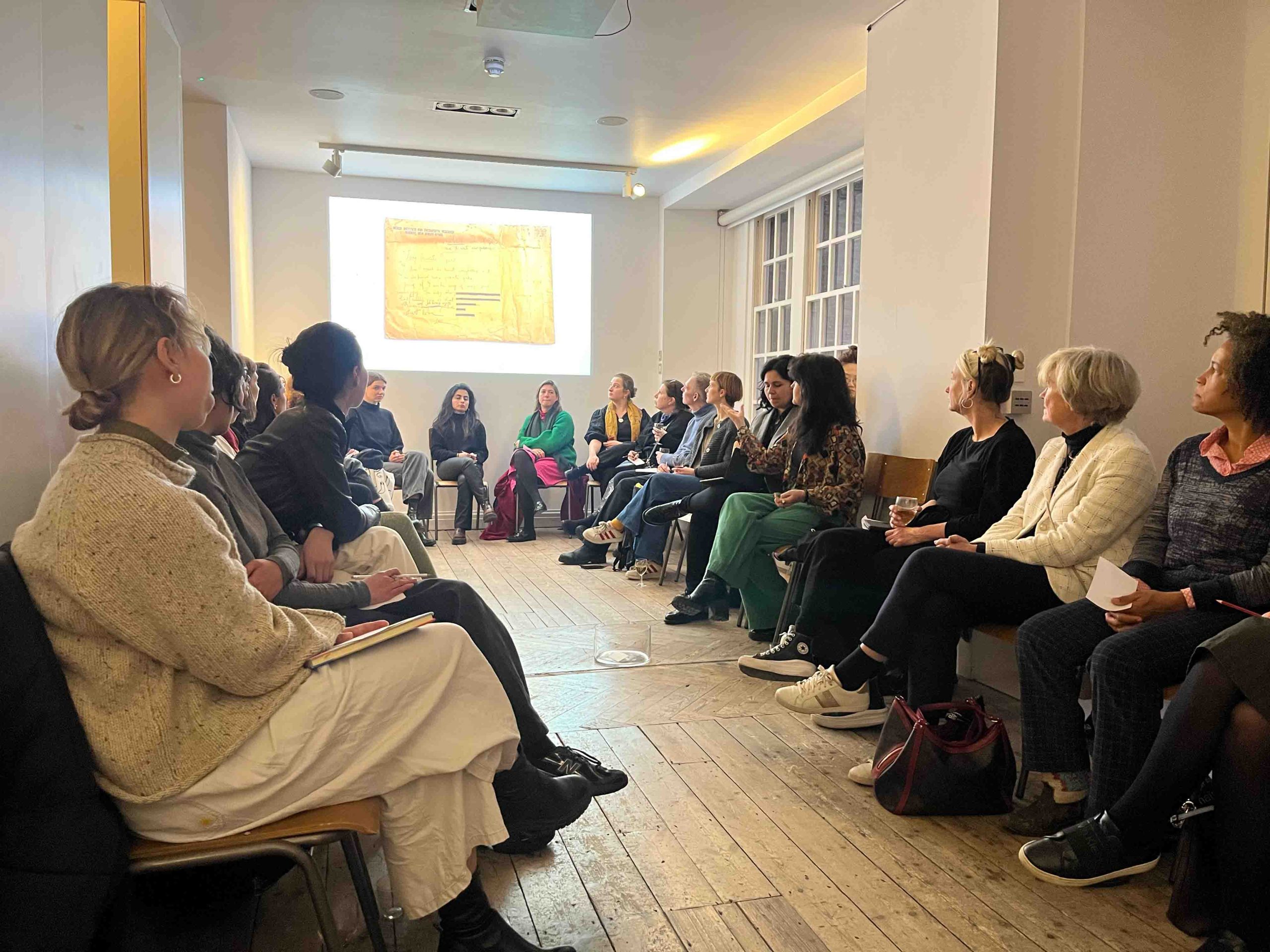
This gathering on a quiet evening at Delfina is one of many encounters with women that dates back to 2018, when I received a phone call from my friend and collaborator Nanda Félix. Her grandmother had just passed away, and she was living through the delicate process of looking over her things and deciding what would stay and what would go. Nanda and I were working together on one of the pieces I directed at that time, Púrpura, in which women performance artists would have one-on-one encounters with audience members (participants), telling stories about their invisible scars hidden within places in Rio de Janeiro. “My grandmother left something, and I know it is for us”, Nanda told me on the phone.
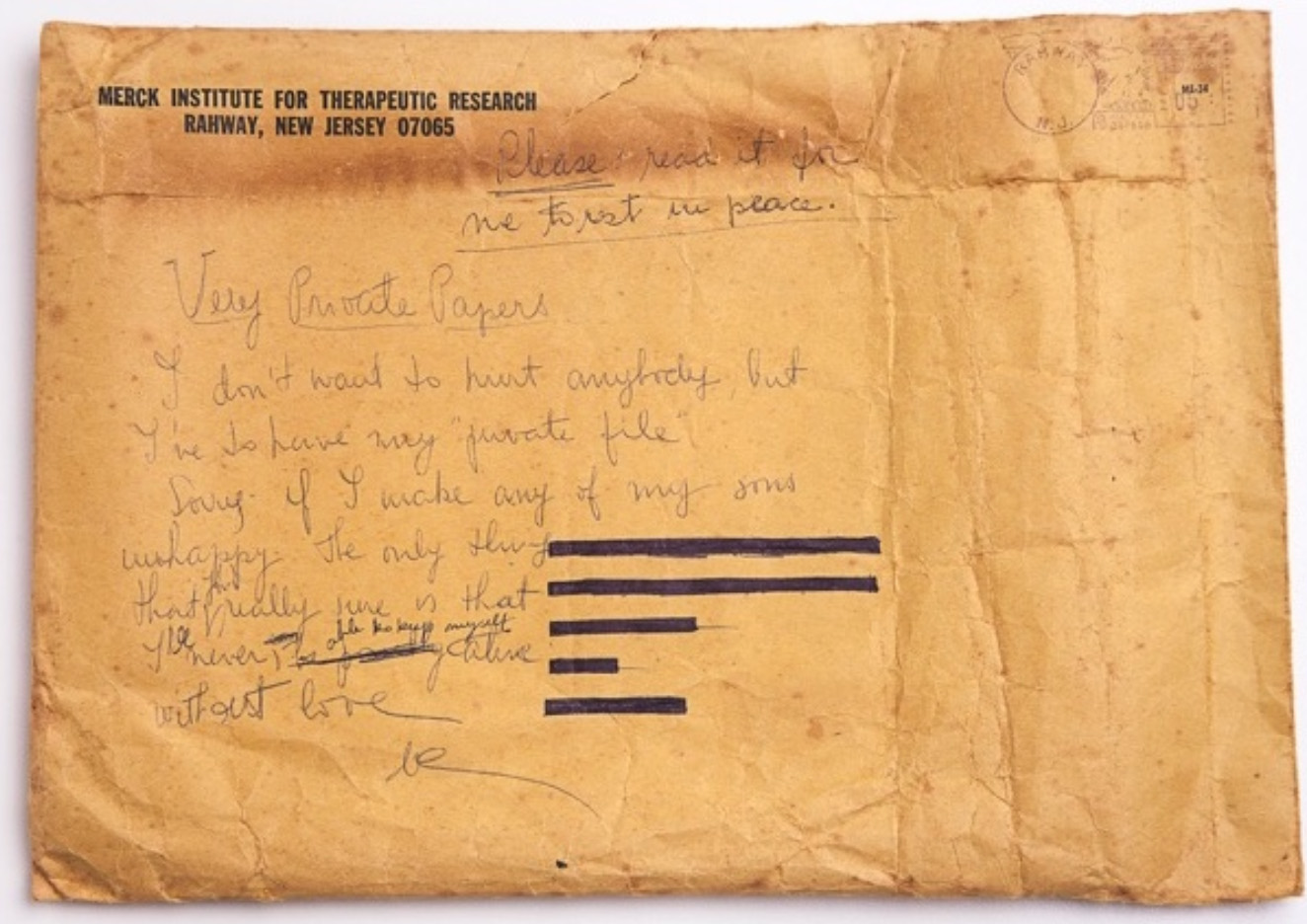
An old envelope, with a handwritten title, “Please read it for me to rest in peace.” Under the title, also handwritten, “Very private papers, forgive me if I cause any suffering to my children, but the only thing I know is that I wouldn’t be able to keep myself alive without love.” Enclosed within this envelope was a psychological report organising her grandmother, MC’s, mental health into topics, and sixteen years of letters and confessions to a priest. MC was committed to a mental institution in the 1950s with postpartum depression and went through several invasive treatments, including electroshock. She was separated from her children and stopped working.
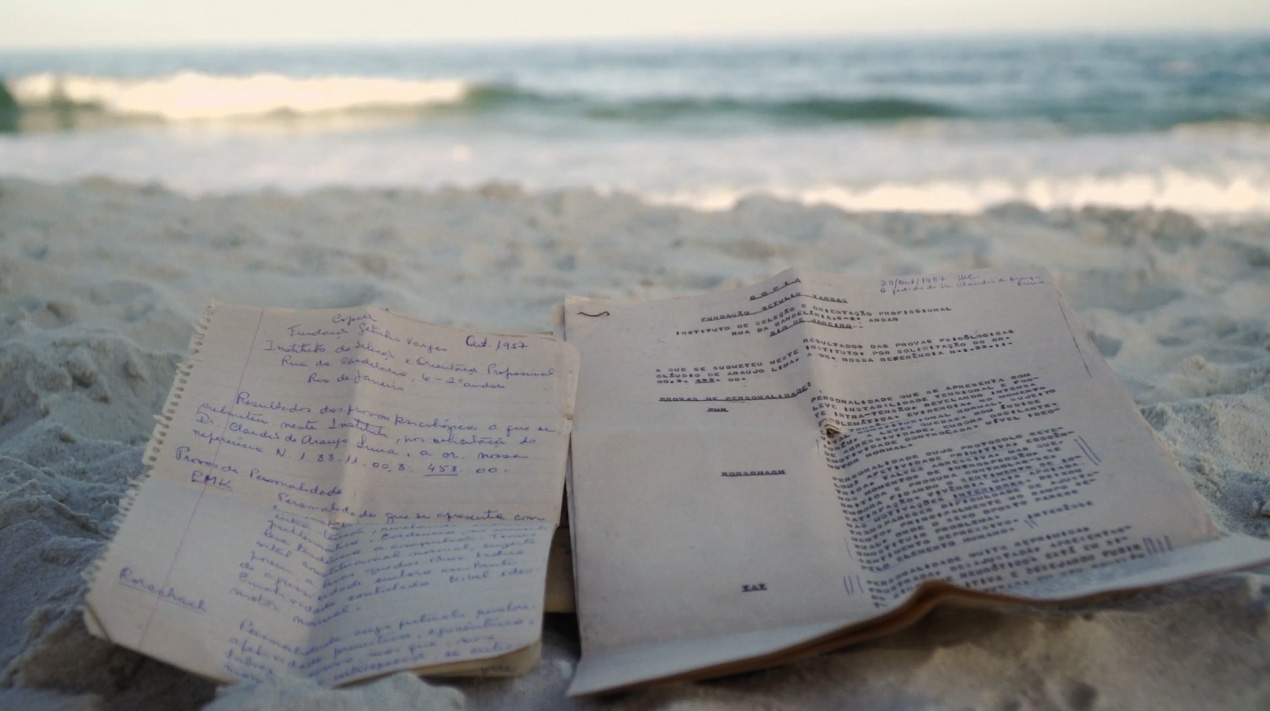
When Nanda opened the envelope and started reading the report, she had hoped to find the answer to many unanswered questions about her grandmother’s identity. What she actually found were very generic words, commonly used to manipulate and silence women. This report could be about herself or any woman in the 2020s; it spoke about the feminine condition in a patriarchal society. The letters, on the other hand, were very intimate confessions about subtle forms of abuse and the loss of identity in a traditional marriage. MC’s story was not only about her as an individual but also about the collective experience of being silenced. Her request, “read it for me to rest in peace”, could also open space for other stories that needed to be unveiled. When we started developing this project, our interest was not only in reflecting on the idea of madness as a way to manipulate and silence women but, more importantly, to open a field of collective discussion. How does MC’s experience touch on what other women are living today? Have you ever been called insane?
I could only approach this project if I made an honest exercise about my own relationship with insanity. I, myself, have been called insane many times throughout life and have struggled with anxiety and depression. Like many other women, I have always been on that fine line, and the idea of insanity has haunted me like a ghost. The spirit becomes particularly possessive in more challenging moments, or when I am trying to make my way into an unknown path. On the other hand, insanity has also been a refuge and helped me to see and name violence that was happening, both at an individual and a systemic level. MC’s experience spoke directly to me, and being honest about that was the way to position myself in this collective field of listening to other women. It is through opening up our own vulnerable states that connection is created.
This project unfolded in many one-on-one encounters and an installation of objects and two films. In one of the films, a choir of women reads the envelope out loud, and this exercise becomes a chanting experience of rage, rawness and emotional release. The other film is a longer narrative with MC’s story in dialogue with contemporary individual stories in a poetic and non-linear montage that brings up images of the unconscious. The installation has been shown in the 13th Mercosul Biennial and had a solo exhibition at Sesc Copacabana, Rio de Janeiro. The films have gone on to travel the world and be included in festivals. Every time the project was shown, the exhibition space also became a host for a circle of women to share their experiences, like the one that I held at Delfina Foundation.
I am an artist of encounters. I have been dedicating the last fifteen years to listening processes that involve entering one’s space of vulnerability and finding where our vulnerabilities meet. I am interested in that invisible line that draws people together once they open up the things that are not yet resolved within themselves – our raw emotions, our questions, our strange sounds.
During my residency at Delfina Foundation, I was working on a project that consisted of spending nights sleeping in the houses of people that I did not yet know, recording conversations right before falling asleep. I would arrive at their houses late at night, and the conversations would take place in the dark of the bedroom. We would sleep in the same room, in the same bed. Together, we would experience the last remnants of consciousness, gradually entering the intriguing universe of sleep and dreams. This is a very specific register of conversation, sometimes intimate and confessional, sometimes totally suspended in space-time, which gave way to unconscious, elusive, non-linear narratives. To share a sleeping space is extremely vulnerable in many senses – opening one’s house, stepping into one’s intimacy, sleeping in the same bed, and allowing ourselves to enter together an unknown zone. There were times when people would tell me secrets, they had never told anyone. And at times, we did not even remember what we were talking about. With this in mind, it would be a surprise to listen to the recording the next day. I have been doing this work in many different cities around the world for almost 10 years now, and it is interesting to get to know a city through such close contact with a few people.
When I was sleeping over at women’s houses, madness and sounds were always recurring matters, as well as how these are manifested in dreams. It was a way of approaching the subject matter I was exploring in my project through a different lens, a shared unconscious experience. Right before going to sleep, we would talk about the times we have been called mad and how we connect with our insanity. We would also make sounds for our stories, embodying the sounds we were taught to reject, remembering what displacement felt like as a teenager, or the importance of advocating for magic.
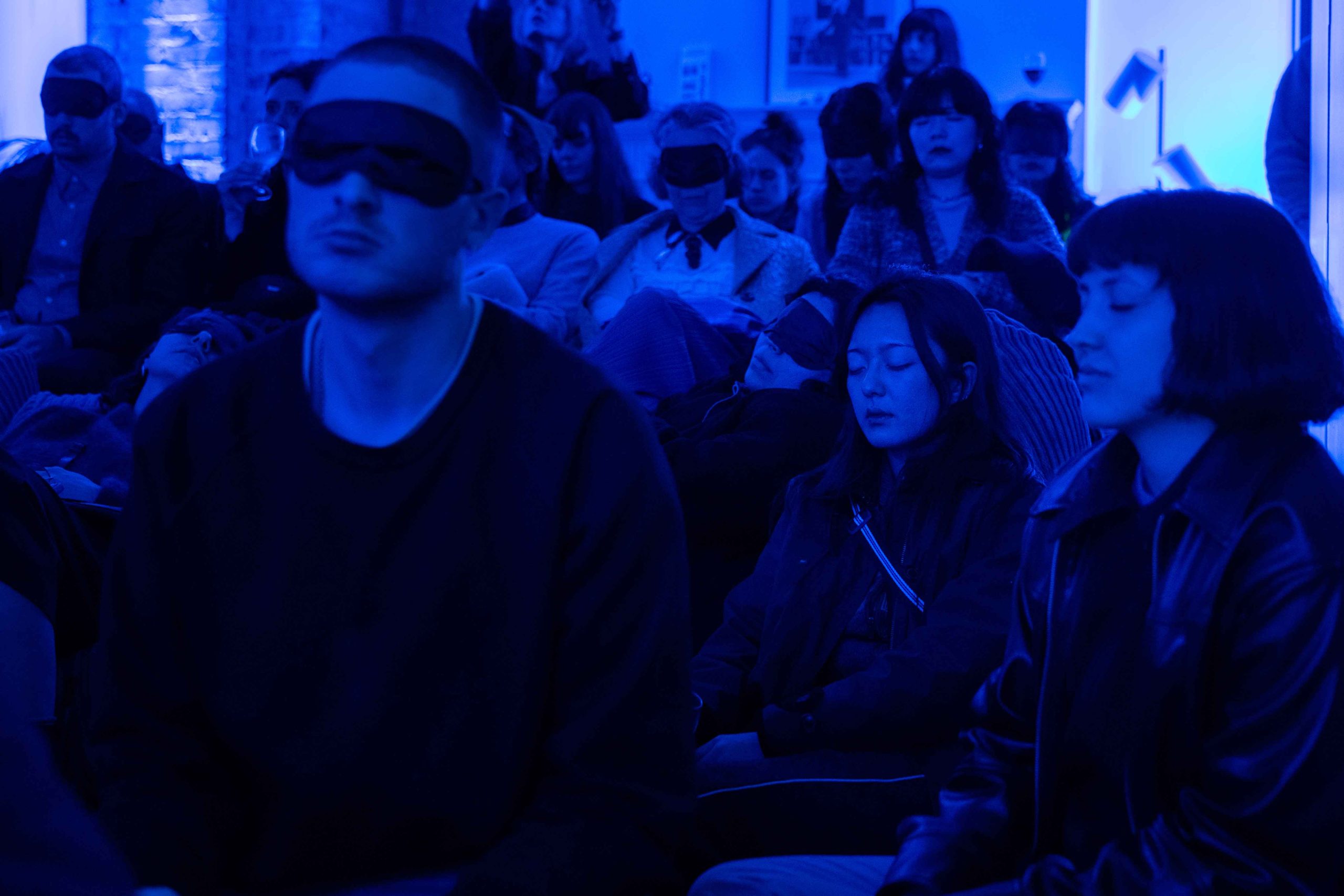
The memories for these conversations became a written piece for a spoken word project presented at A Night of Encounters, our end-of-season open studios. People were blindfolded with sleeping masks and could hear my voice, as well as a live soundtrack, performed by Nina Miranda, one of the people I met during a sleepover session. The narrative started with a collection of dreams that people told me about the end of love in a neoliberal context, which evolved into a sex doll called Harmony, ending with an ode to curved lines and the strange, intense, hidden sounds of women. The idea of harmony as a way to maintain the unspoken rules of a patriarchal culture was subverted by these sounds and narratives made by women. Nina would get closer and closer to some people and make sounds on a one-on-one scale. People were also invited to get into a vulnerable state for listening. At this point, the sleepover experience, between two people, became collective; intimacies were placed side by side and would cross over each other, mediated through the fragments of my memory and the sensorial experience of sound and darkness.
When I look back at my time at Delfina, I find myself thinking about the power of shared vulnerability. There is a beauty in navigating through life, day by day, in this state of attention and presence that listening to another person requires. If I were to describe these three months, I would think of porosity. A day-to-day that is constructed by encounters – either in a circle of women, in the silence of one’s bed or taking a long walk with another resident. There is something about “orchestrated serendipities” * that I will never be able to fully grasp. Whenever I feel that I understand what these experiences are about, the other person will take me somewhere totally unknown and challenge my certainties. Being with another person with no finality, listening genuinely and allowing oneself to tap into someone else’s universe is an oasis for a social and political system based on self and extractivism. There is something extremely political in breaking with the pattern of productivity and consumption that has been introjected in us to a point that even our relationships have become assets. Vulnerability opens a space where our certainties dissolve, other worlds open up, and we are able to perceive that there are many different things happening if we are willing to pay attention. And this comes back to connecting with our own madness and allowing our madnesses to meet.
Anna Costa e Silva, 2025
*The expression “Orchestrated serendipities” was first said by curator Guilherme Teixeira about my practice during a studio visit in São Paulo.